
STEP 1
Read before concluding
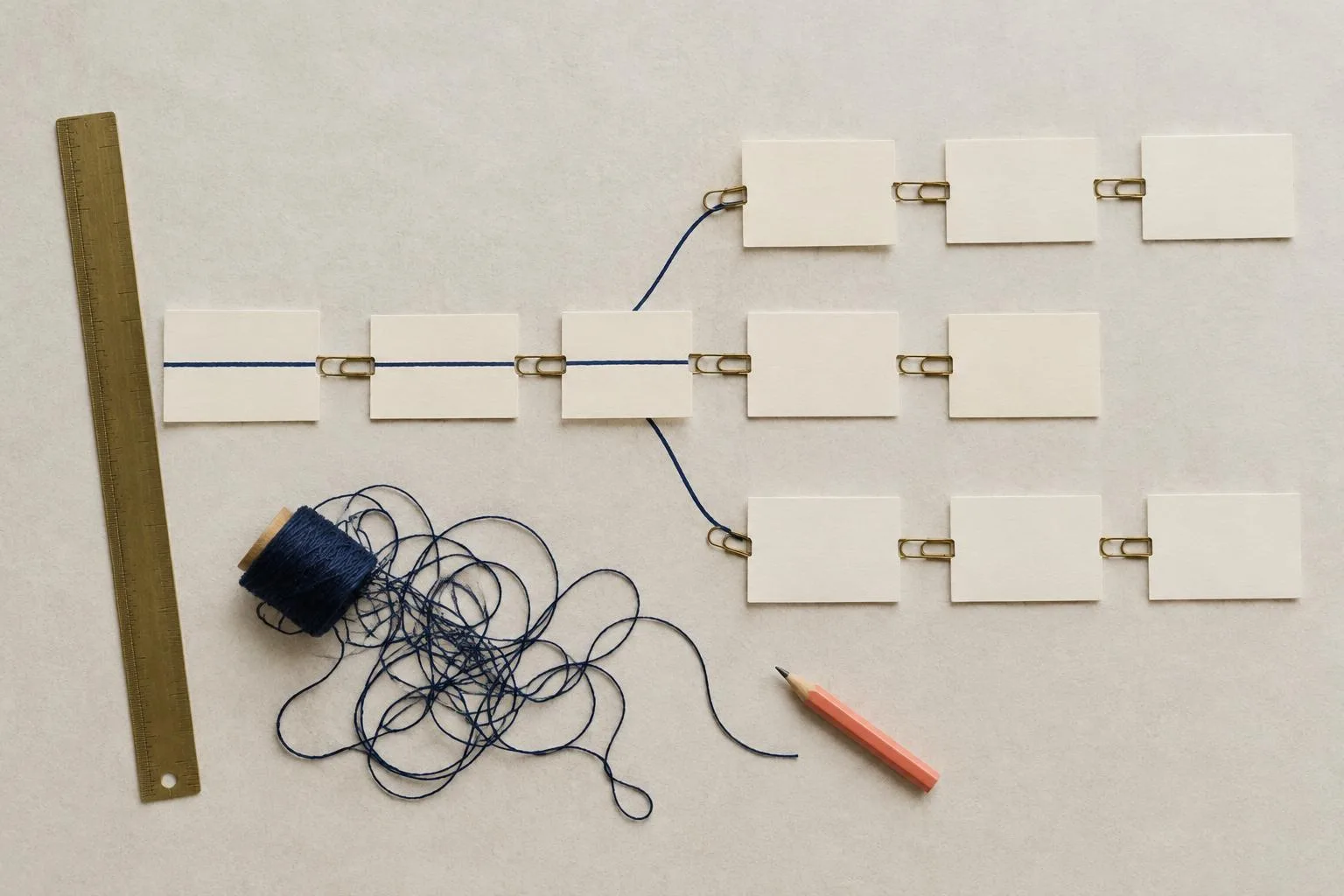
Treat the score as a lead. Examine the flagged passages, what the detector actually covered and the policy that applies.
Myth Busters
Turnitin’s own guidance says its model can misidentify text and should not decide misconduct alone. A flag starts a review; it does not settle authorship.
THE MYTH
An AI detector can prove who wrote a document.
The tempting mistake is to turn a detector percentage into an authorship finding. Turnitin describes something narrower: its AI Writing Report marks qualifying prose that its model determines could be AI-generated, or generated and subsequently modified. The percentage describes qualifying text, not the probability that a particular person used AI.
That distinction matters wherever a document can trigger a grade, disciplinary decision or workplace review. Turnitin explicitly says its model can misidentify human-written, AI-generated and AI-paraphrased text. It says the report should not be the sole basis for adverse action and calls for further scrutiny, human judgment and the organization’s own policies.
So the myth is straightforward: a detector result may be evidence worth examining, but it is not proof of who wrote a document. The sensible question is not whether the detector must be ignored. It is what the result can actually establish, and what other evidence is needed before somebody acts on it.
The strongest reason to reject detector-as-proof comes from the toolmaker’s instructions. Turnitin says its overall percentage represents qualifying prose its model identifies as likely AI-generated or likely AI-generated and then modified. That is a classification of text. It is not an identification of a writer.
There is another easy category error here. The AI percentage is independent of Turnitin’s similarity score. Nor is it a probability that an individual used AI. Reading “23%” as “23% chance this person cheated,” for example, assigns a meaning the report does not claim to provide.
Scope matters too. Turnitin defines qualifying text as prose sentences in long-form writing. It says the detector does not reliably detect AI-generated poetry, scripts, code or short-form and unconventional material such as bullet points, tables and annotated bibliographies. A document-level number therefore comes with boundaries before any investigation even begins.
None of this makes a detector pointless. A passage flagged by a model can provide a reason to inspect the work more closely. The problem begins when a signal designed to initiate scrutiny is treated as though the scrutiny has already happened.
Turnitin’s warning is unusually clear: its model “may not always be accurate” and can misidentify human-written, AI-generated and AI-paraphrased text. The company says it should not be used as the sole basis for adverse action. Determining misconduct requires further scrutiny, human judgment and the institution’s applicable policies.
The product also contains a concrete concession to uncertainty. Turnitin says its testing found a higher incidence of false positives from 1% through 19%. It therefore no longer surfaces a numerical score or highlights in that range, displaying an asterisk instead. Reports created before July 8, 2024 may still contain those lower numerical scores.
That safeguard does not mean every score at 20% or higher is correct. Turnitin separately states that false positives are possible. Equally, its guidance does not establish that every flag is wrong. The useful boundary is simpler: a model result can support a review, while authorship or misconduct requires evidence beyond that result.
A percentage has the visual authority of measurement, which makes the distinction easy to miss. But measurement and conclusion are separate jobs. Detector output answers what a model classified within eligible text. An authorship finding asks who created the work and, often, whether their conduct violated a particular rule.
What does the detector percentage establish?
A high AI percentage proves that the named writer used AI to produce the document.
It is a model classification of qualifying text. Turnitin itself requires further scrutiny and human judgment before adverse action.
Practitioner accounts show why the issue becomes messy in practice, although they cannot establish detector accuracy or false-positive rates. In one Reddit post, a teacher said colleagues stress-tested an unnamed detector with writing they had produced themselves and saw it flagged. The teacher characterized detector results as circumstantial evidence needing additional proof.
That teacher described a more useful source of context: a visible writing process. Assignments were structured so the teacher could examine how drafts developed, and students were advised to preserve editing history. Version history is not infallible proof of authorship either, but it can add evidence about how a document came together.
A separate graduate student reported being told that Turnitin gave a final essay a 23% AI score despite the student denying AI use. The student later showed annotated source material and Google Docs change history, reporting no official penalty but a lowered grade. That is one person’s account, not a controlled test.
These stories should therefore be used for what they demonstrate: the practical stakes and the kinds of evidence people reach for when a score is disputed. They do not tell us how frequently detectors err. They do show why resolving authorship from one percentage can leave important evidence outside the frame.
There is a useful middle ground between “the detector proved it” and “detectors are worthless.” Turnitin explicitly designed its report to help educators identify text that might have been prepared with generative-AI or text-altering tools. “Might” is doing important work: the report can identify material for closer examination.
That examination should respect the detector’s coverage. A mixed document may contain prose alongside tables, bullets, code or other material the model does not reliably detect. The percentage applies to qualifying text, so reviewers should first understand what the tool actually evaluated before interpreting the result.
For businesses, schools and other organizations, the transferable lesson is procedural. Separate automated screening from the decision that follows. A flag can prioritize attention; the decision should rest on the relevant policy and the fuller evidentiary record. That preserves the detector’s useful role without quietly promoting it into an authorship oracle.
The same caution applies in the other direction. These sources do not establish that every detector finding is false or that screening has no value. They establish the narrower point needed to bust this myth: classification alone does not identify a document’s author or independently establish misconduct.
A defensible review starts by deciding what kind of question you are answering. “Did a model flag this prose?” is different from “Who wrote this?” and different again from “Did this person violate our policy?” Keeping those questions separate prevents an automated signal from becoming a verdict by default.
Process evidence can include contemporaneous drafts, research notes and document version history. Such records are context, not magic receipts: none necessarily proves authorship alone. The writer’s explanation and the substance of the work can also be considered alongside whatever procedures the organization requires.
Most importantly, document the basis for the eventual decision independently of the detector percentage. That makes clear whether the finding rests on a fuller record or merely repeats the model’s classification in official language. A detector can be part of that record without being allowed to become the whole record.
STEP 1
Treat the score as a lead. Examine the flagged passages, what the detector actually covered and the policy that applies.
STEP 2
Review available drafts, notes and version history as contextual evidence. Do not treat any single artifact as conclusive proof.
STEP 3
Give the writer an opportunity to explain the work, then decide from the full record and the applicable rules.
06 THE VERDICT
BUSTED
THE CHECK: Would this decision still make sense if the detector score disappeared? BUSTED: A detector can flag text. It cannot prove who wrote it.
KEEP READING
GOT A MYTH?