

Finding the release evidence
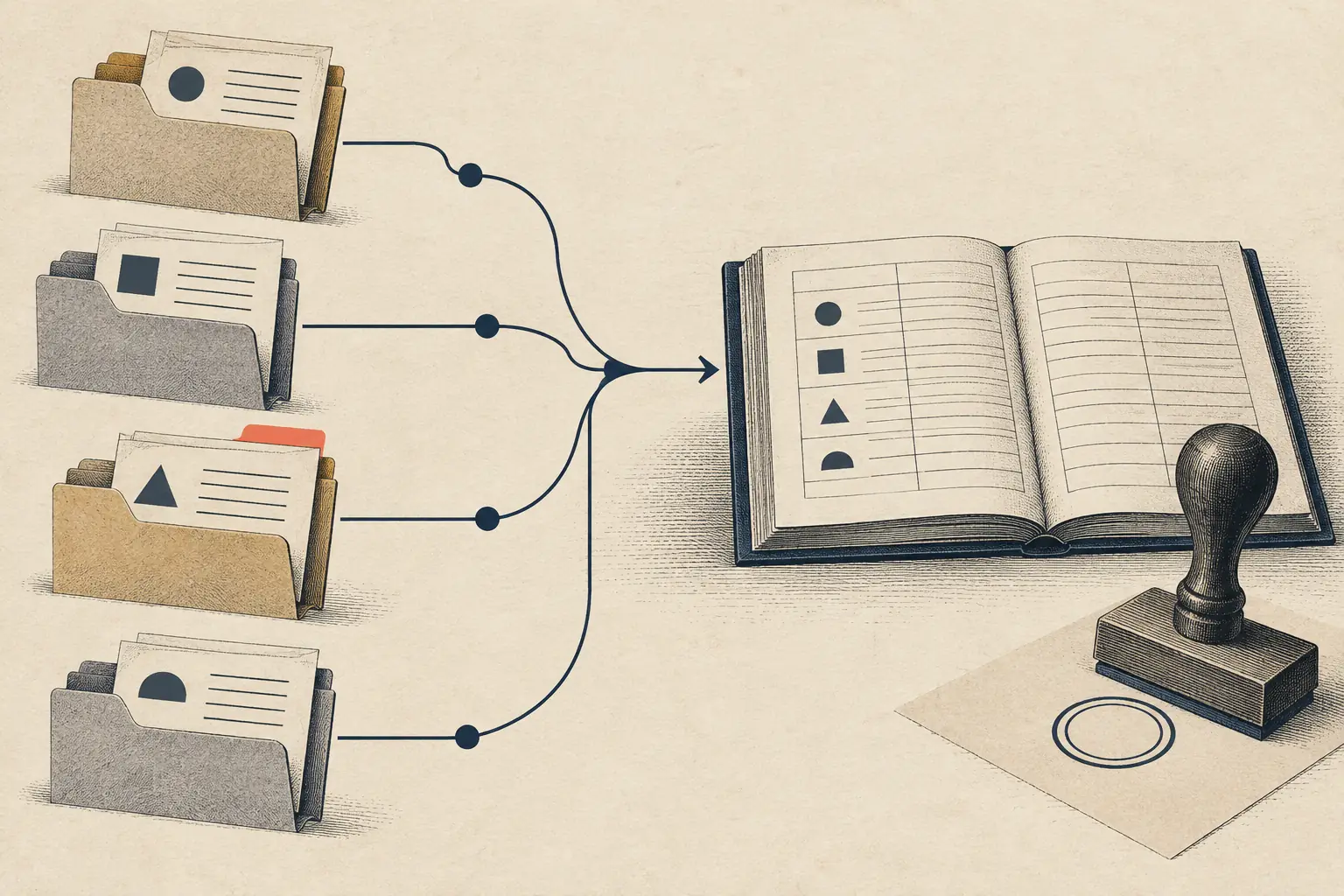
Regulated software teams can reach release time with requirements, risks, tests and approvals spread across separate systems. Before reviewers can assess that evidence, someone may first have to find the records, assemble them and establish how they relate.
In its Meta Reality Labs case study, Ketryx says automated evidence generation and continuous traceability reduced compliance review cycles from weeks to minutes while retaining human approval. That timing is company-reported and has not been independently validated. Faster compliance review also does not necessarily mean a faster software release.
Faster compliance review also does not necessarily mean a faster software release.
Ketryx names five connected tools: Jira, GitHub, Azure DevOps, Bitbucket and TestRail. The described workflow includes one human approval gate before write-back. It also separates two jobs: maintaining links among records and examining them for gaps or conflicts.
Those details describe the setup, not its speed. For reviewers, the relevant question is whether connected evidence makes the work easier to inspect without obscuring records or risks that remain unresolved.
What the agents check
Ketryx’s explanation of its AI Agents separates two kinds of work that can blur together in a demonstration. Deterministic automation maintains linked evidence across connected tools, while agents examine those records for gaps or conflicts. Connecting records and determining whether they disagree are distinct tasks.
In the company’s design, agents produce explainable, redlined recommendations. A person must approve a change before it synchronizes back to the system of record. The redline gives the reviewer a specific proposed change to inspect rather than only a generated recommendation.
A person must approve a change before it synchronizes back to the system of record.
On paper, that shifts compliance review from assembling a dossier near release toward examining already connected evidence and proposed corrections. It explains the mechanism behind Ketryx’s approach, though not the reported weeks-to-minutes timing.
An illustrative demonstration could follow a requirement through its linked records, surface a conflict and show exactly which field would change before approval. That would show the distinction between automated checking and the human decision that follows it; it would not measure review-cycle performance.

Where human approval starts
Human approval is an explicit boundary in Ketryx’s described workflow. A person has to approve changes before synchronization. The description does not establish who holds final release authority or how extensively each recommendation is checked. Approving a record change and taking responsibility for a release are different functions.
A Meta medical-device director also participated in a Ketryx-hosted session about embedding checks in native tools. That establishes customer participation, but it is not independent confirmation of the reported reduction from weeks to minutes. A customer appearance is not an audit.
A customer appearance is not an audit.
There is also a coverage question. Examining connected records cannot establish that every necessary record has been connected. Reviewers still need visibility into what the system examined, what remains unresolved and what may sit outside it.
That matters because connected evidence can look orderly while still being incomplete. The workflow can make included records easier to review, but reviewers need enough context to identify omissions and understand the recommendation’s limits.

Continuous evidence, bounded claims
Ketryx’s approach runs evidence generation and traceability continuously rather than leaving evidence assembly until release time. The practical aim is to identify missing links while teams can still address them, reducing work spent reconstructing relationships among requirements, risks, tests and approvals at the end.
The system also keeps recommendations reviewable before they become changes in connected tools. Under the described design, the reviewer receives a redline and retains approval authority over the proposed change. Automation maintains and examines evidence, while a person decides whether a recommended modification should be written back.
Saving review time has value.
The conclusion is narrower than Ketryx’s headline result. The company presents a plausible mechanism for reducing evidence-chasing and reports a substantial improvement in compliance review time at Meta Reality Labs. The workflow can be examined on its merits, but the weeks-to-minutes figure should not be treated as an independently established benchmark.
The useful standard is whether the signer can understand the evidence and unresolved risks, not simply how quickly a review closes. Saving review time has value. Knowing what was examined, what changed and what was approved remains the responsibility attached to the decision.